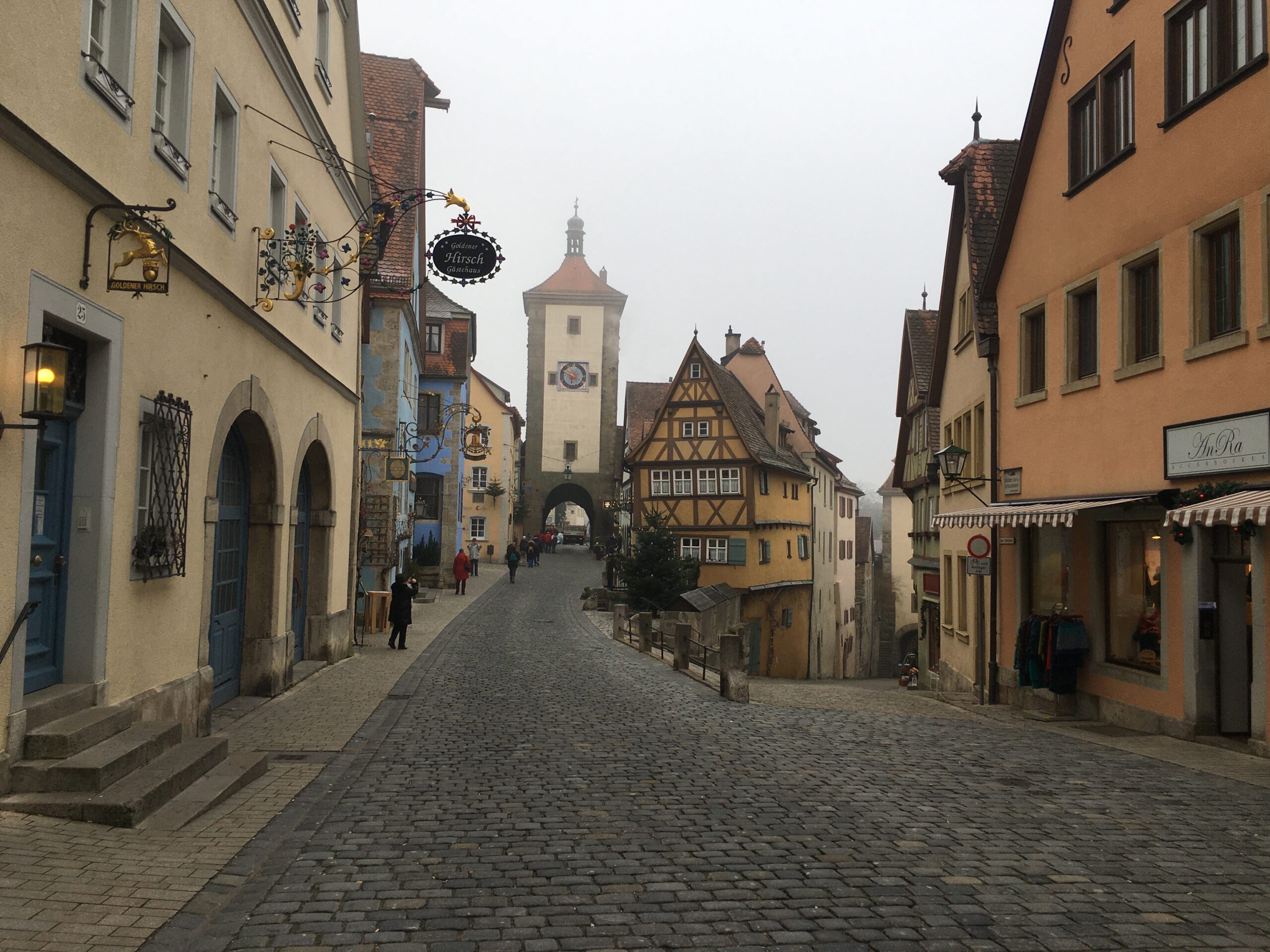
When most people picture Germany, they’re usually picturing Bavaria.
Do any of these come to mind for you? Snow-capped Alpine peaks, fairytale castles, lederhosen and dirndls, beer gardens overflowing with laughter on a warm summer evening, church spires rising above half-timbered town squares.
That image isn’t wrong, but it doesn’t tell the whole story
Bavaria is Germany’s largest state and arguably its most recognizable. It’s home to some of the country’s most iconic landmarks, from Neuschwanstein Castle to Oktoberfest, and many travelers arrive expecting a destination defined by tradition alone.
And while tradition is held closely to the Bavarian people’s hearts, there is a complicated history that inspires them to keep a loose grip on it.
Beyond the postcard imagery lies a state where world-class museums share space with mountain villages, where cutting-edge industries thrive alongside centuries-old traditions, and the first-of-its-kind war trials shook the world and left a lasting impact on global justice initiatives.
That complexity is largely why I love it.
Bavaria may be Germany’s most visited state, but it still has an incredible capacity to surprise.
The Way to Experience It
I love a balance of history, the outdoors, and beautiful sights.
This is easy to achieve in the enormous state, which stretches from the vineyards of Franconia in the north to the Alps along the Austrian border. Munich alone can easily fill several days, while destinations like Nuremberg, Regensburg, Garmisch-Partenkirchen, Berchtesgaden, and Füssen each offer entirely different experiences.
Trying to see each of these places would be overwhelming. Definitely include Munich, but stick to just one or two other locations unless you have more than a week to dedicate here.
Munich is the ideal starting point. The city combines grand architecture, exceptional museums, vibrant food markets, and automotive icons. Yet within an hour or two, you can find yourself surrounded by Alpine scenery, exploring palace gardens, or wandering village streets.
That is the kind of quality location I am a fan of!
One day might involve a guided tour through the ornate Munich Residence. The next could be spent hiking above a crystal-clear lake in the Alps or enjoying lunch locally in the city’s expansive English Garden.
For anyone wanting both city life and the outdoors within reach, Munich encompasses that dream.
Food: The Real Highlight
Let’s start by addressing the obvious.
Yes, Bavaria has excellent beer.
Beer halls, breweries, beer gardens, and centuries-old brewing traditions remain an important part of local culture. Sharing a table with strangers in a bustling beer garden is still a quintessential way to experience Bavarian hospitality.
But beer is only one part of the story.
Complemented by the fermented beverage, Bavarian cuisine varies regionally. In the south, you’ll find Alpine influences reflected in dishes featuring cheese, game, and hearty mountain herbs. Around Munich, classics like Weisswurst and pretzels remain beloved staples. Franconia, in northern Bavaria, offers an entirely different culinary identity, with distinctive wines, seasonal produce, and a growing reputation among food lovers.
My favorite German dish is actually the Franconian variation of Sauerbraten, which is similar to pot roast.
This is also where many travelers are surprised to learn that Bavaria produces excellent wine.
The Franconian wine region along the Main River is particularly known for Silvaner and other crisp white wines. The region’s vineyards, historic towns, and wine taverns provide a charming counterpoint to the Alpine experiences that dominate most Bavaria itineraries.
For food and wine travelers, Bavaria is far more diverse than its beer-dominant reputation suggests.
Castles, Culture & Living History
Bavaria has a ridiculous concentration of cultural treasures.
The famous castles often receive the most attention, particularly Neuschwanstein, whose towers inspired Sleeping Beauty’s castle in Disneyland. Yet Bavaria’s historical richness extends far beyond a single landmark.
Nuremberg tells stories of medieval prosperity and modern reckoning. Regensburg preserves a lovely iteration of Germany’s medieval city centers. Munich offers everything from royal palaces and opera houses to contemporary art and technology museums.
Then there are the smaller discoveries.
Pilgrimage churches hidden in Alpine valleys. Monasteries producing beer and cheese. Castles housing falconries that you can engage with. Lakeside villages that feel as though they were designed specifically for watercolor painters.
What I admire most about Bavaria is its commitment to retaining its identity, without remaining stuck in the past.
This isn’t a region preserving its heritage solely for visitors. Festivals, local customs, seasonal celebrations, and regional distinctions continue to play an important role in everyday life.
It is a gem in the hearts of Germans.
Where I Would Stay
For travelers seeking elevated accommodations, Bavaria offers some of Germany’s finest properties.
In Munich, Hotel Vier Jahreszeiten Kempinski or the Hotel Bayerischer Hof both combine historic elegance with an exceptional location in the heart of the city.
For a true Alpine retreat, Schloss Elmau provides one of Europe’s most distinctive luxury experiences, pairing mountain scenery with world-class wellness, dining, and cultural programs.
Near Lake Tegernsee, Althoff Seehotel Überfahrt offers lakeside tranquility with refined service and easy access to both Munich and the Bavarian Alps.
Each provides a different perspective on Bavaria while maintaining the highest level of hospitality that defines the region.
If I Were Planning This Trip
Stay:
I would split my time between Munich and a second base tailored to personal interests. Food and wine lovers might head north toward Franconia, while outdoor enthusiasts could choose the Bavarian Alps or Berchtesgaden.
Do:
Visit the major highlights, of course. But leave room for slower experiences. Spend an afternoon in a beer garden. Take a scenic boat ride on an Alpine lake. Explore a local market. Wander through villages that rarely appear on social media. Take a small hike to enjoy the views.
Expand:
Bavaria pairs beautifully with neighboring Austria. Combining Munich, Salzburg, and the Austrian Alps creates one of Europe’s most rewarding cultural and scenic itineraries. For travelers with additional time, Switzerland can fit naturally into the journey as well.
Who This Place Is (and Isn’t) For
Bavaria is ideal for travelers seeking a destination that combines beauty, culture, food, history, and outdoor adventure in equal measure.
It works particularly well for first-time visitors to Germany because so many iconic experiences are concentrated within a single state. Yet it remains equally rewarding for repeat visitors willing to look beyond the most famous landmarks.
This may not be the best destination for travelers seeking Germany’s most contemporary or urban-focused experiences.
Bavaria proudly embraces its traditions. If you’re looking for a vibrant club scene, head up to Berlin.
In Conclusion
After exploring every German state in this series, it is fitting to end with Bavaria.
Not because it is Germany’s most important state, but because it is often the gateway through which travelers first encounter the country.
The challenge—and the opportunity—is to look beyond the stereotypes.
Yes, you’ll find beautiful castles, beer gardens, and Alpine scenery.
You’ll also find sophisticated cities, remarkable culinary traditions, world-class cultural institutions, and communities that continue to shape Bavaria’s identity in ways both old and new.
It is such a gift that a place like Bavaria gives us. We can enter in with all kinds of assumptions, only to be pleasantly surprised when we explore it ourselves.

Let’s work on your personalized Germany itinerary!
Find me on Travel Leaders Network!


