If you’ve traveled to or from Berlin on land, you’ve encountered Brandenburg. Possibly without even realizing it!
The state surrounds Berlin entirely—the region wrapped around one of Europe’s most dynamic capitals. But while Berlin draws the attention, Brandenburg presents a contrast. It’s where the pace shifts, the landscape opens into lakes and farmland, and a legacy of royal influence is on grand display.
This isn’t a destination built around a single landmark or headline attraction. Brandenburg is compelling in how naturally it fits into a broader journey through the country—offering space, texture, and a different lens on Germany just beyond the capital’s border.
The Way to Experience It
The best way to soak up Brandenburg is to protect wide open block of time.
Within a short distance from Berlin, the scenery changes completely. Lakes begin to appear—thousands of them—and with them, a culture built around water. A characteristic you’ll recognize from Brandenburg’s neighbors to the north. In warmer months, locals head to nearby lakes for swimming, picnicking and lounging for the day. I’m sure that sounds familiar!
One of the most distinctive landscapes in the region is the Spreewald, a UNESCO-protected network of waterways where movement happens by boat rather than road. Traditional flat-bottomed punts glide through narrow canals, connecting small villages and forested paths in a way that makes you feel deeply present.
Elsewhere, Brandenburg is experienced through movement—cycling routes between towns, drives past fields and forests, and gazing out the window as the atmosphere shifts, leaving the city behind.
Food: The Real Highlight
Brandenburg’s food scene is colorfully enhanced by a number of local fruits and vegetables.
Spring is defined by white asparagus (Spargel), and Brandenburg is one of Germany’s key growing regions. You’d be hard pressed to find a menu that doesn’t feature it as a special this time of year. Particularly as it relates to celebrating Easter.
The Spreewald brings something entirely different: Spreewälder Gurken, a variety of pickles that have been produced here for over a hundred years and are now protected under EU designation. Their flavor—herbaceous, slightly tangy, and distinct—comes from traditional recipes and the region’s unique growing conditions. Plus, they became an icon of East German cuisine from the days when the state was behind the Iron Curtain.
Freshwater fish also plays a role, particularly around the lakes, alongside game dishes in more rural areas.
And then there’s the national rhythm that ties it all together: coffee and cake in the afternoon. It’s not rushed, not incidental, but an intentional pause in the day—something to be enjoyed properly, whether in a village café or a lakeside terrace.
Art, Architecture & the Texture of the Land
Brandenburg’s visual identity is refreshingly diverse.
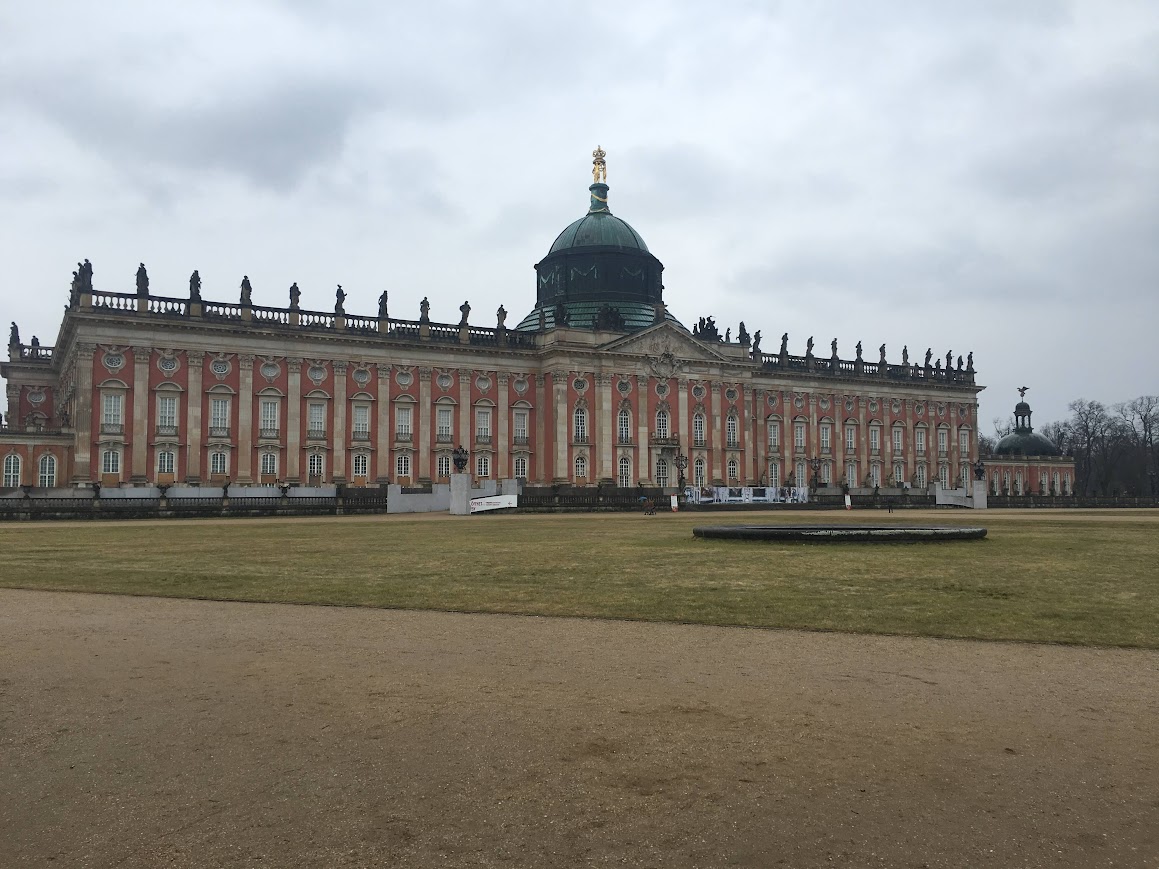
Small villages with fieldstone churches and manor houses appear throughout the countryside, while larger historical statements are found in places like Potsdam. Here, Sanssouci Palace and its surrounding gardens reflect Prussian influence at its most refined—terraced vineyards, formal landscaping, and architecture designed to impress without overwhelming.
Elsewhere, the landscape itself becomes the defining feature. Long tree-lined roads, agricultural fields, and stretches of forest create a sense of continuity that feels distinctly northern German.
You may find yourself wanting to stay a little longer.
If I Were Planning This Trip
Stay:
- The Lakeside Burghotel zu Strausberg — Surrounded by a golf course and featuring a spa, this castle hotel will give you a distinct sense of place that you can enjoy with great comfort.
- Alwine – Landhaus an den Spreewiesen — A beautiful country home combining elevated interiors with access to the surrounding countryside.
- Hotel am Jägertor — A refined, boutique-style stay in Potsdam with easy access to both cultural sites and nearby nature.
Do:
- Explore the waterways of the Spreewald by boat for a fresh perspective
- Spend a day in Potsdam visiting Sanssouci and walking through its gardens.
- Rent a bike and follow one of Brandenburg’s extensive cycling routes between lakes and villages.
- Build in unstructured time—you’ll find spots in your wandering that you’ll want to pursue!
Timing:
Late spring through early autumn offers the most range—spring for asparagus season, summer for lake culture, and early autumn for quieter landscapes and mild weather.
Who This Place Is (and Isn’t) For
Brandenburg is well suited to travelers who want to balance time in Berlin with something more grounded—those who enjoy nature, regional food traditions, and a slower rhythm between city experiences.
If you’re looking for high-energy nightlife, constant activity, or dense sightseeing, Berlin is right there and delivers all of that exceptionally well. Brandenburg is a complement, by no means a replacement!
In Conclusion
For many visitors, Brandenburg is the gateway into the heart of Germany. Berlin is its own special place, it can’t be considered representative of the country.
Here, lakes shape daily life, seasonal foods are highly anticipated, and landscapes stretch into the distance, dotted by gentle rural towns.
This is a place that rounds out an experience—one that adds depth, balance, and a different perspective on what time in this part of Germany can look like.

Let’s work on your personalized Germany itinerary!
Find me on Travel Leaders Network!


