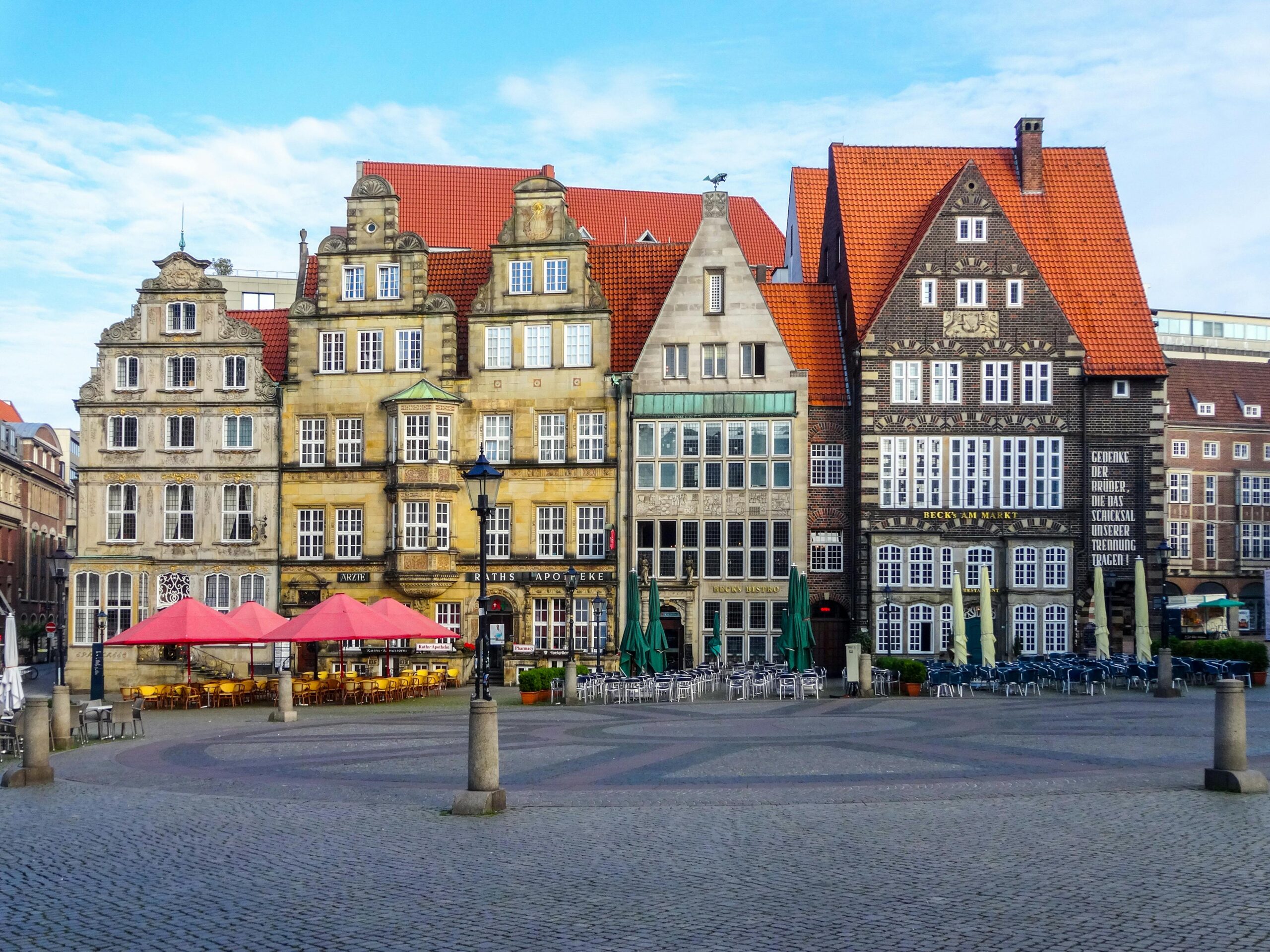
It can come as a surprise that Bremen is its own German state. It’s small—just the city of Bremen and the port town of Bremerhaven—but its influence historically has far surpassed its borders.
If you spend enough time here, you’ll be able to identify how that legacy is still a part of the day-to-day. As I’ve mentioned before, Bremen was once one of the powerful cities of the Hanseatic League, the medieval trading network that connected ports across northern Europe. Merchants, sailors, and goods from distant places moved through the city’s harbor for centuries, shaping a still-thriving culture.
Bremen isn’t stuck in the past. It’s a city that has folded its history into everyday life, providing locals with a secure foundation upon which they can further industry and contribute to the arts.
You’ll see it said that you only need to spend a few hours here. But those who stay longer are treated to the authentic sense of place that settles once tour buses have left for the day.
The Way to Experience It
If you want to understand Bremen, start in the old heart of the city and simply walk.
The Marktplatz is where the city has gathered for centuries. It’s surrounded by architectural landmarks that quietly tell Bremen’s story: the ornate Bremen Town Hall, a masterpiece of Weser Renaissance architecture, and the towering St. Peter’s Cathedral, which has watched over the square for more than a thousand years. The Town Hall and the nearby Roland Statue together form a UNESCO World Heritage site, symbols of the civic independence Bremen fiercely protected during the Middle Ages.
But let me share a highlight that comes just after that.
A short walk away is the Schnoor Quarter, a labyrinth of narrow lanes lined with tiny medieval houses that once belonged to fishermen and craftsmen. Today they hold small galleries, cafés, and shops, but the streets remain so narrow you sometimes feel as though the buildings are leaning toward each other in conversation.
I wonder what their inhabitants hundreds of years ago would think of their homes now. I imagine they would be tickled by how treasured these spaces are!
Food: The Real Highlight
Northern German food tends to be seafood-heavy, and Bremen follows that tradition—with a few of its own distinctive local touches.
One of the best-known regional dishes is Bremer Knipp, a hearty mixture of pork, oats, and spices that reflects the practical cooking traditions of the region.
And then there’s coffee.
Bremen has a long relationship with the coffee trade thanks to its port, and the city remains one of Germany’s most important coffee hubs today. Coffee roasters and cafés are scattered throughout the city, and locals take their afternoon coffee breaks seriously.
For a relaxed Bremen experience, find a café table along the river and watch the day move slowly past. A favorite pastime of mine whenever I can take the time to get away!
Art, Architecture & the Texture of the City
Bremen’s architecture reflects its past as a trading city that grew wealthy but never lost its practical northern character.
Grand buildings from the Hanseatic era sit comfortably beside working warehouses and brick industrial structures. One of the most unusual streets in the city is Böttcherstraße, an early-20th-century expressionist architectural project filled with brick sculptures, archways, and artistic details.
Elsewhere, the Schlachte Promenade along the Weser River shows Bremen’s maritime identity more directly. Historic ships line the waterfront, and in warmer months locals gather here in the evenings for food, conversation, and long sunset views over the river.
As you can imagine, the city’s atmosphere always factors in the water. Bremen grew because of the river, and it still shapes its contemporary identity.
If I Were Planning This Trip
Stay:
Choose a hotel within walking distance of the historic center so you can explore the old city early in the morning and late in the evening, when it feels most ethereal.
Do:
- Spend time wandering the Marktplatz and stepping inside Bremen Town Hall if possible.
- Explore the winding lanes of the Schnoor Quarter.
- Walk along the Schlachte promenade at sunset along the Weser River.
- Visit Böttcherstraße to see one of Germany’s most unusual architectural streets.
Timing:
Late spring through early autumn brings outdoor cafés, riverfront gatherings, and long evenings along the Weser. December is also magical when Bremen hosts its beautiful Christmas markets.
Who This Place Is (and Isn’t) For
Bremen tends to delight travelers who appreciate cities with personality and history woven into everyday life. If you enjoy wandering historic neighborhoods, lingering in cafés, and discovering cultural layers in smaller cities, Bremen is wonderfully rewarding.
Those looking for a large concrete jungle will find it quieter than they’d like!
In Conclusion
Living in and visiting Bremen means spending time in a place where the past is never far away—but doesn’t overshadow the present either.
This city has spent centuries trading with the wider world, welcoming travelers, merchants, and new ideas while holding onto its strong sense of independence. Experience it for yourself!
You’ll notice we didn’t touch on Bremerhaven at all, the other locale that makes up the state of Bremen. We’ll be back! Stay tuned for its feature later this year. It is well-deserving of it own particular attention.

Let’s work on your personalized Germany itinerary!
Find me on Travel Leaders Network!


