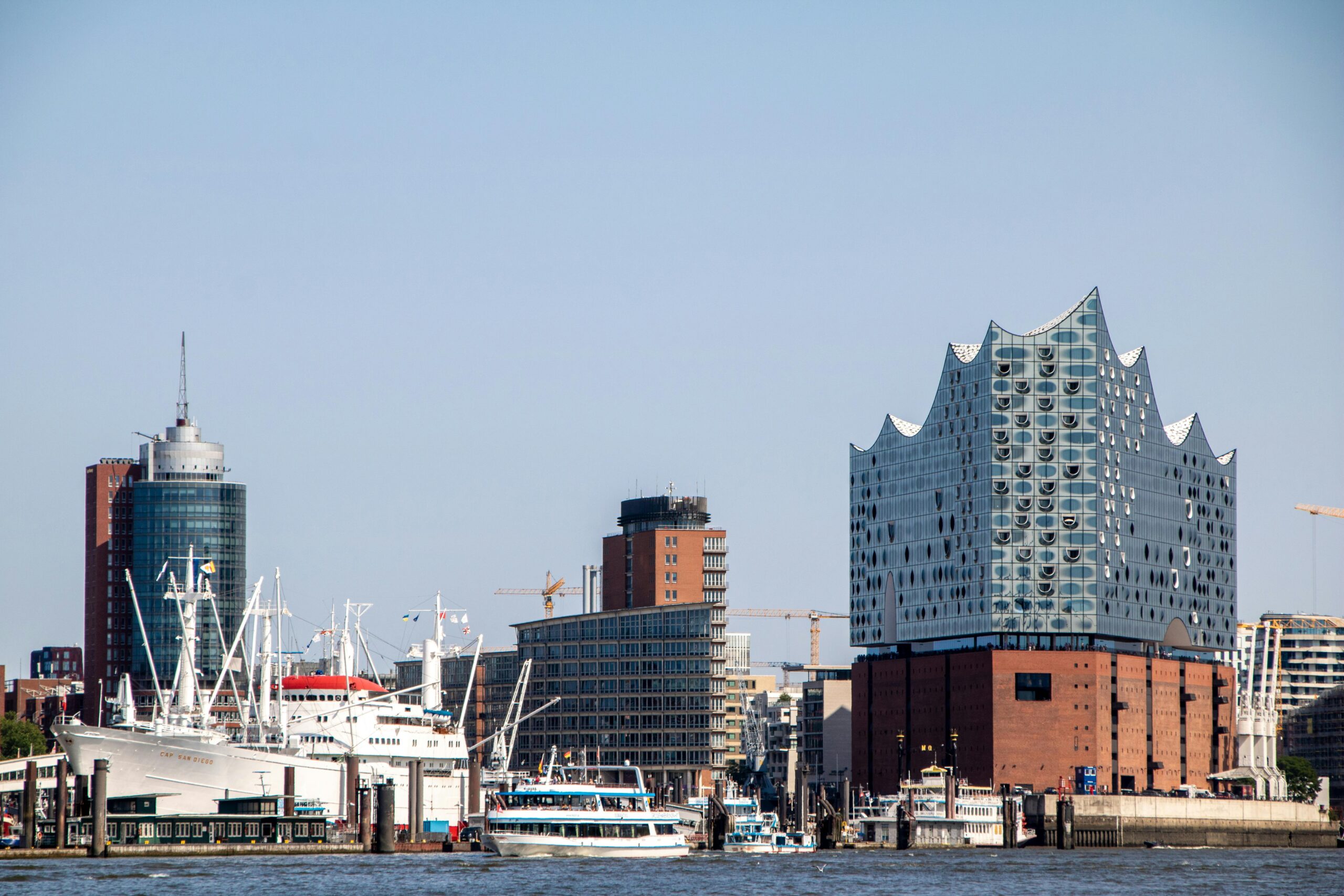
Hamburg is a beautiful city, revealing itself in reflections on the waters of its harbor and the glass facades of many cultural institutions. Here you’ll find brick warehouses in calm canals, church spires rising above the Elbe River, and events that commemorate over 800 years of traceable relevance to maritime trade. Centuries of arrivals and departures have taken place in its waters, and those waters serve to inspire both the arts and sciences here. This city continues to be shaped by movement; shipping, currents, and urbanization are continually in conversation.
Join the flow of Germany’s second largest city (and one of the country’s sixteen states all in itself!). To visit Hamburg is to step into a place that is simultaneously well-grounded and perpetually active.
The Way to Experience It
You can’t immerse yourself in the city without incorporating the water. Here in Europe’s third busiest port, it provides more than a good atmosphere—it’s essential. Walk along the Elbe early in the morning, when the harbor is quietly waking up, and feel the city stretching in preparation for the day. From there, slow your pace as you wander through canals and bridges. Sometimes referred to as the “Venice of the North”, Hamburg boasts more bridges than Amsterdam, London, and Venice combined!
Along those canals, take a stroll through the Speicherstadt, a UNESCO-listed complex of red-brick warehouses rising straight from the water. Here you’ll find all sorts of engaging activities for the whole family; a functioning model train system spanning (mini) continents at Miniatur Wunderland, an immersive role-playing adventure at the Hamburg Dungeon, or the history of many warehouse products (think coffee and spices) at the Speicherstadtmuseum.
Hamburg rewards aimless exploration. Duck into any of the fourteen neighborhoods rather than ticking off tourist attractions. Follow the sound of gulls or the smell of fresh pastries from a nearby café. Let the city’s scale surprise you—it’s vast, but it rarely feels overwhelming, especially when experienced on foot or by ferry.
Food: The Real Highlight
Hamburg’s cuisine is shaped by its port: practical, comforting, and tied to the water. Fish is central, of course, but so is the idea of simple food done well—meals meant to sustain people who have always worked with their hands in the elements.
Seek out local classics like Fischbrötchen (fish sandwiches best enjoyed standing by the harbor), Labskaus (also popular in Schleswig-Holstein), and Rote Grütze (a red-fruit dessert for those who like tartness in their sweets). Cafés here tend to feel lived-in rather than curated, and bakeries are serious business—perfect places to pause, recenter, and watch the city move.
Hamburg doesn’t require you to chase trends. It invites you to notice quality.
Art, Architecture & the Texture of the City
Hamburg’s beauty is understated and confident. The city’s aesthetic is heavily historical brick—especially in the old warehouse districts—and contemporary glass architectural icons. This old-and-new balance reflects its ongoing relationship with trade and culture. The Elbphilharmonie, rising above the harbor, is the most striking example: modern, bold, and reflecting the water below it (this is the beautiful glass building in the photo).
Elsewhere, neighborhoods like Blankenese offer steep stairways, river views, and a village-like calm that feels worlds away from the city center. Hamburg is a city of contrasts—industrial and elegant, historic and forward-looking—unapologetically.
If I Were Planning This Trip
Stay:
Choose a hotel near the water or canals, ideally somewhere walkable to both neighborhoods and ferry routes. Areas around the harbor or along the Alster offer a strong sense of place without feeling touristy.
Do:
- Take a harbor ferry—not as a tour, but as transportation.
- Wander through Speicherstadt at dusk, when the brick glows and the water goes still.
- Spend time along the Elbe, especially in quieter residential areas like Blankenese.
- Step inside a church or concert hall simply to experience the acoustics and light.
Timing:
Late spring through early autumn brings long evenings and a softer energy to the city, though Hamburg’s moody weather suits it year-round if you don’t mind a little wind and drizzle.
Who This Place Is (and Isn’t) For
Hamburg is for travelers who like cities with depth rather than dazzle. If you enjoy port towns, layered (and LONG) history, strong local identity, and authentic everyday life unfolding around you, this city will resonate. If you’re looking for postcard perfection or constant spectacle, Hamburg may feel too reserved—but that restraint is exactly where its character lives.
In Conclusion
Hamburg is a city built on exchange—of goods, of people, of ideas—and that legacy still shapes its culture. It’s a place that invites observation more than performance, reflection more than rush. The longer you stay, the more it opens up.
Hamburg doesn’t ask to impress you. It simply keeps moving, and you move along with it.

Let’s work on your personalized Germany itinerary!
Find me on Travel Leaders Network!


