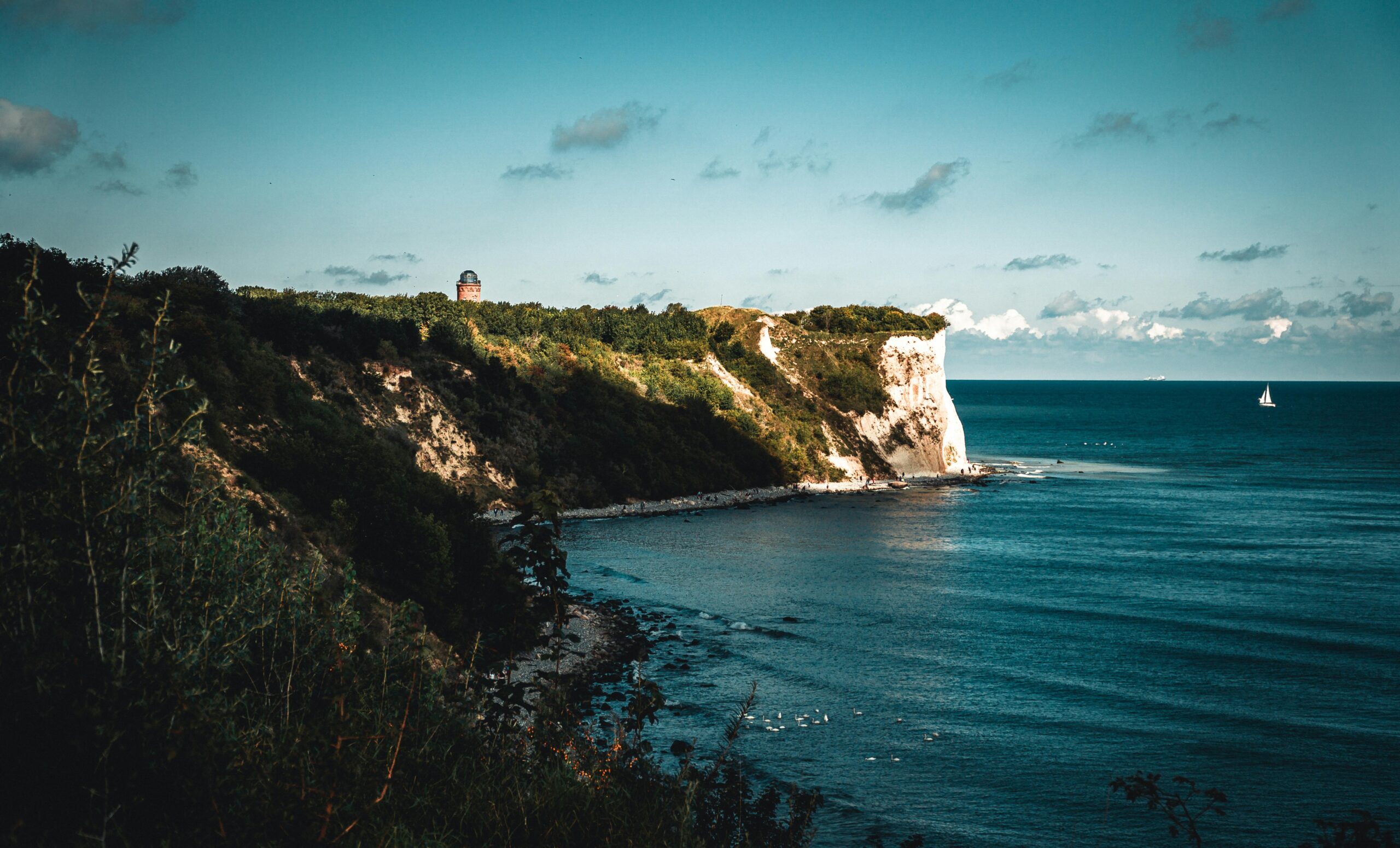
If you think Germany is all timber-framed cities and fairytale castles, then Mecklenburg-Vorpommern will surprise you. This northeastern state is a breath of salt air with lakes stretching toward the horizon and Baltic waves breaking upon sandy shores. It’s a place meant for slow mornings, long walks, and days measured by light on the water rather than checklists.
The Way to Experience It
Start your day with the sun rising over the Baltic Sea, where white chalk cliffs and wide beaches stretch for miles. Let the early light guide you toward hidden coves and seaside towns that are still home to fishermen. Then head inland toward Müritz Lake, the largest lake fully within Germany’s borders, where dense forests meet placid water and herons stalk fish through reeds — a landscape made for paddling, cycling, or simply sitting undisturbed by anything but birdsong.
Mecklenburg-Vorpommern isn’t going to rush you. Its calm comes from wide horizons, sea breezes, and rustling flora and fauna.
Food: The Real Highlight
Naturally, the local cuisine is shaped by water and farmland alike: game meat from deer and wild boar, smoked eel by the lakes, and sea buckthorn, referred to as the “lemon of the north”. Seek out regional favorites like smoked fish platters, hearty fish soups, and creamy potato dishes.
Local specialties worth trying include:
- Marinated fried herring plate — a local staple.
- Smoked eel near the coast — often paired with crisp local beer.
- Labskaus — a northern delicacy made of herring, corned beef, potatoes, and onions.
- Sanddorn (sea buckthorn) delights — jams, juices, and desserts made from these vitamin-packed berries grown near the sea.
Wander into waterfront cafés or lakeside beer gardens to enjoy small tastes of local life that feel as genuine as the landscape that surrounds you.
Art, Architecture & the Texture of the Land
Mecklenburg-Vorpommern is not lacking for beautiful structures. Brick Gothic churches rise above quiet villages. Manor houses and restored estates reflect centuries of wealth through trade. And the land itself even tells a story — sedge-covered dunes by the sea, silent forests, and waters so still they become mirrors.
Here, you’ll find history in museums and woven into nature: the medieval old towns in Wismar and Stralsund hold UNESCO World Heritage–distinctions, while small harbors serve as a testament to the quiet legacy the region holds.
If I Were Planning This Trip
Stay:
- Book a few nights in any of the number of palaces-turned-hotels: Schloss Fleesensee, Schloss Schlemmin, Schloss Basthorst, etc; or the quirky, yet luxurious Hotel Nautilus.
- Add a few nights at a seaside resort near Usedom Island or the island of Rügen for ocean sounds and understated elegance.
Do:
- Cycle or paddle around Müritz National Park, enjoying lakes and wildlife.
- Wander the old town centers of Wismar and Stralsund — UNESCO-recognized treasures.
- Watch the sunrise or sunset on a quiet Baltic beach with dunes and sea grasses.
Time of year:
- Late spring through early fall brings warm days and longer evenings, perfect for beach walks, lake paddling, and relaxed café hours.
Who This Place Is (and Isn’t) For
If you love wide horizons, nature that feels almost timeless, and coastal culture with a gentle pace, Mecklenburg-Vorpommern will charm you. If you crave blazing nightlife or crowded attractions, this is not the place for that style of travel — and that’s exactly part of its draw.
In Conclusion
Mecklenburg-Vorpommern beg for your attention — it invites you to breathe. Its open landscapes, historic harbors and serene lakes offer not just sights, but moods: reflective, unhurried, and deeply grounded. Would you lean into long beach walks first, or build your days around tranquil breakfasts on the lakeshore?

Let’s work on your personalized Germany itinerary!
Find me on Travel Leaders Network!


