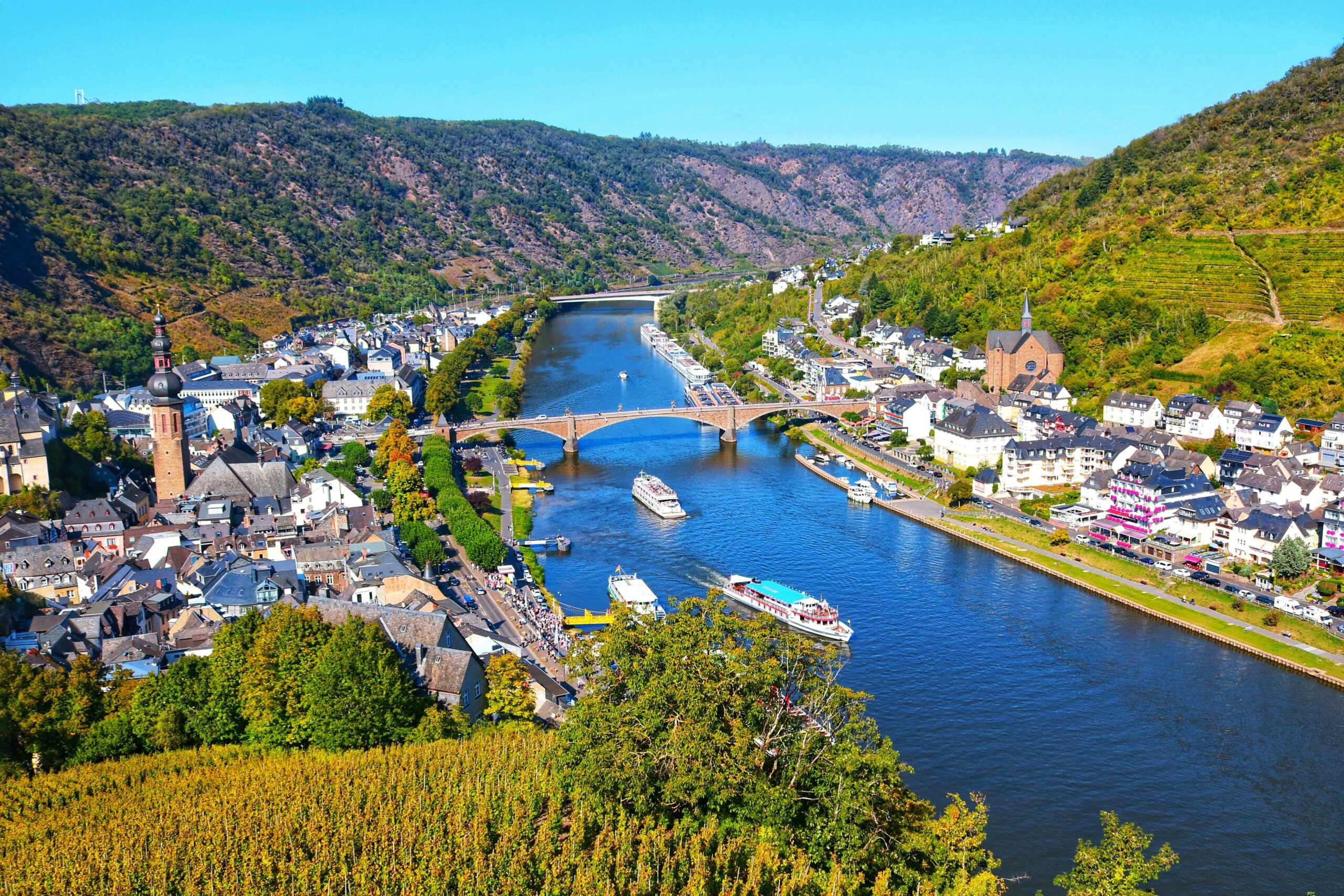
Rhineland-Palatinate is the Germany many people imagine before they ever arrive: vineyard-covered hills, castle ruins rising above winding rivers, and medieval towns clustered beneath church spires. Located in the country’s southwest along the borders of France, Luxembourg, and Belgium, it carries a distinctly layered identity shaped by geography, trade, and centuries of cultural exchange.
This is one of those places you’ll visit and be amazed that more people aren’t talking about it.
The landscapes are dramatic, certainly, but not wild. Vineyards are maintained. River traffic continues, though often more for tourism than the trading of goods. Small towns function as communities first and tourist destinations second.
That balance is what will make you feel like you’ve struck travel gold!
And as you settle into it, you’ll see that Rhineland-Palatinate is romantic in the way that the landscape itself invites gentle strolls, evenings at the winery, and supporting local.
The Way to Experience It
To maximize your time in Rhineland-Palatinate, I recommend narrowing down the state’s nine regions into your top two or three preferences. Or, pick a theme to follow!
Interested in a trip structured around castles? Perfect. Check out Burg Eltz, an original castle that has been owned and managed by the same family for nearly 900 years.
Do you have a wine affinity? The river Rhine cuts past steep vineyard terraces and legendary fortress ruins, while the Moselle winds through quieter valleys lined with wine villages and half-timbered towns. Not only will you enjoy delicious vintages, but you can contrast landscapes as you do so!
As always, I would strongly encourage choosing fewer destinations and staying longer.
To contribute to this structure, maybe you’d consider adding some of the region’s extensive hiking to your itinerary! Walk between wineries on paths like the Moselsteig trail, or set your sights upon a variety of architecture on the Lahn Hiking Trail.
Rather than packing up each morning and switching hotels, wander local markets, visit historic sites, and linger over wine beside the water, using particular towns as launching points. Allow yourself the freedom to live like a local.
While the river valleys naturally receive the most attention, Rhineland-Palatinate extends beyond them. The Pfalz region introduces warmer weather, expansive forests, and a slightly Mediterranean atmosphere by German standards. Historic cities like Mainz, Trier, and Koblenz each offer completely different perspectives on the region’s history and identity.
And you will derive value from each of these experiences.
Food: The Real Highlight
Few German states are as deeply connected to wine as Rhineland-Palatinate.
As I’ve hinted at, the region contains several of the country’s most important wine-growing areas, including portions of the Moselle, Rheinhessen, Nahe, and Pfalz regions. Riesling dominates many vineyards, particularly along the Moselle, where steep slate-covered hillsides produce wines known for their minerality and precision.
A trip structured entirely around wine is easily achieved here. But, there’s plenty of culinary bonuses to include.
French influence subtly appears throughout parts of the region, especially in the southwest. Seasonal produce, delicate sauces, freshwater fish, wild game, and hearty tavern fare all coexist comfortably depending on where you are dining. In wine villages, meals often feel intentionally simple so the wine remains central. You’ll definitely want to inquire about wine pairings, if they aren’t already featured on menus. Elsewhere, especially in larger cities, offerings become more refined and contemporary.
The Pfalz region is particularly worth noting for food lovers.
Its warmer climate supports asparagus, chestnuts, almonds, and a more expansive agricultural culture than many travelers expect from Germany. Outdoor dining feels especially natural there during warmer months, with wine gardens and vineyard terraces becoming social centers well into the evening.
In stark contrast to American culture, wine here feels integrated into daily life rather than reserved for special occasions.
This all reflects a rich component to a visit you’ll be glad you made.
Art, Music and Living History
Rhineland-Palatinate contains some of Germany’s most iconic historic landscapes.
The Upper Middle Rhine Valley alone holds dozens of castles and fortress ruins overlooking the river from dramatic hilltops. Many of which date back to the Middle Ages, when control of trade routes along the Rhine brought enormous wealth and political power to the region.
But the historical relevance here goes far beyond the medieval era.
Trier, one of Germany’s oldest cities, still contains remarkably preserved Roman structures including the Porta Nigra and ancient bath complexes. Mainz carries centuries of religious and intellectual significance and is closely associated with Johannes Gutenberg and the invention of the movable-type printing press.
The architectural variety is noticeable across the region as well.
Some towns are unmistakably medieval, while others display Baroque splendor or Roman legacy. Vineyards, monasteries, castles, and churches often appear within the same stretch of landscape, layered together in ways that are quintessentially European.
As is true of much of Europe, the blend of history with everyday life is a grounding setting for experiencing the world.
If I Were Planning This Trip
Stay:
I would divide time between a larger cultural base such as Mainz or Trier and a smaller wine town along either the Rhine or Moselle. Staying directly within the river valleys allows you to experience the region after day visitors move on, often the most atmospheric time of day.
Do:
Prioritize depth over distance. River cruises, vineyard visits, wine tastings, castle walks, and long meals outdoors all fit naturally here. Smaller towns are as much of a priority as major cities.
Timing:
Late spring through early autumn is ideal, particularly during wine season. September and October are especially beautiful as vineyards begin turning color and harvest festivals fill many towns. Consider a river cruise in December to have a warm homebase that allows you to enjoy the area’s Christmas markets.
Who This Place Is (and Isn’t) For
Rhineland-Palatinate is ideal for wine lovers, photographers, history enthusiasts, and travelers seeking a more relaxed pace.
This is not the best fit for travelers seeking major metropolitan energy or urban experiences.
In Conclusion
Rhineland-Palatinate is deeply tied to some of Europe’s most enduring ideas of beauty and travel.
Its rivers, vineyards, castles, and historic towns create landscapes that appear impossibly cinematic at times. Yet the region never feels artificial or overly curated.
Life continues moving through these valleys much as it has for centuries.
And that is why the experience lingers so strongly after visiting.
Not simply because the scenery is beautiful, but because Rhineland-Palatinate reminds you how closely culture, landscape, and daily life can still remain connected.

Let’s work on your personalized Germany itinerary!
Find me on Travel Leaders Network!


