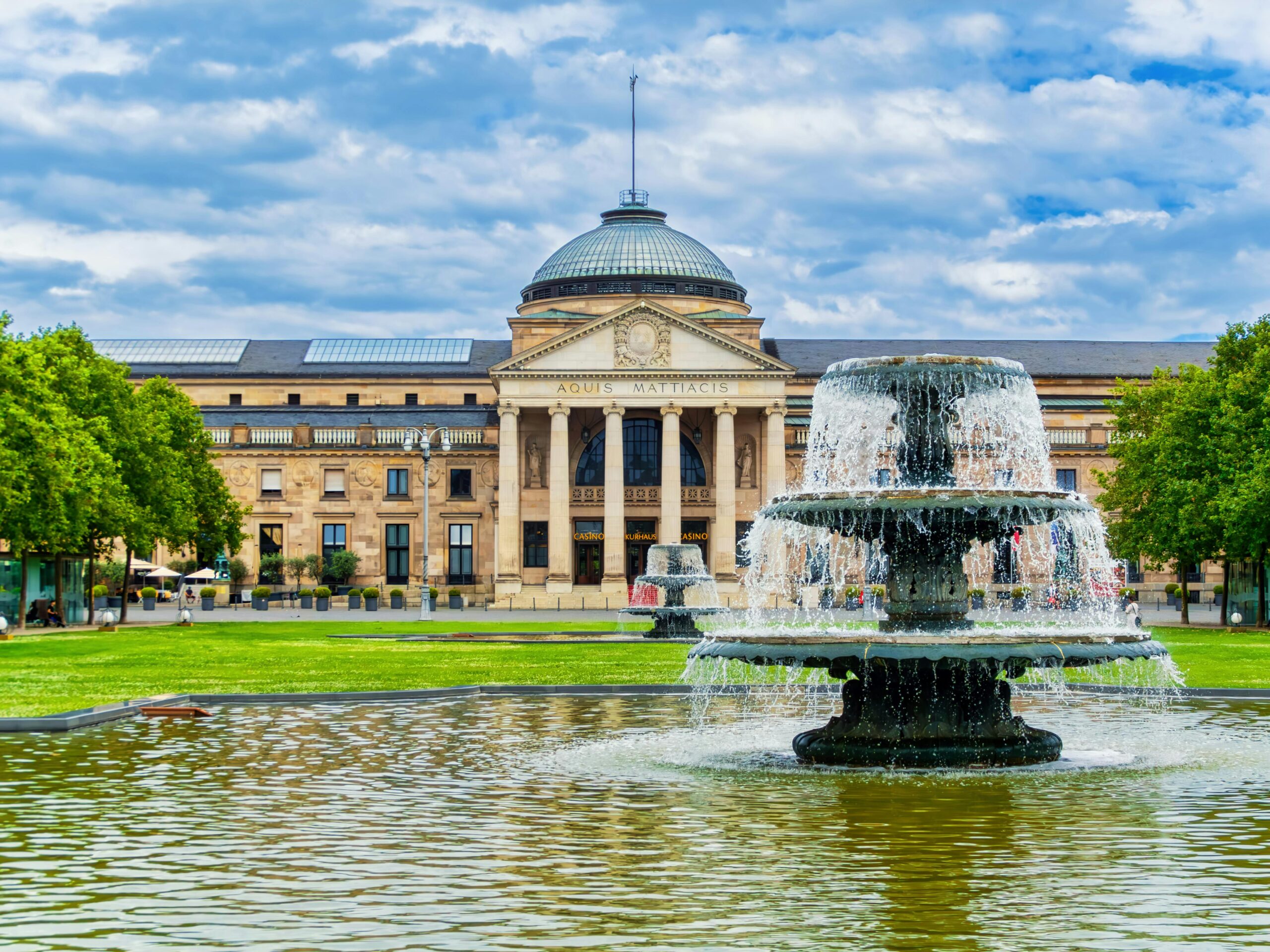
As a whole, Hessen is a rich combination of natural and cultural offerings.
Frankfurt’s glass skyline represents modern Germany at full speed, while nearby iconically German half-timbered villages and forested valleys would appear a world away. Spa towns once frequented by European aristocracy sit within easy reach of volcanic landscapes, vineyard-covered hills, and some of the country’s most storybook scenery.
That contrast makes Hessen compelling and versatile.
Located in west-central Germany, Hessen is often overlooked as a convenient transportation hub thanks to the international Frankfurt Airport and the nation’s generally extensive railways. But reducing it to a point of transit would have you overlook this incredibly charming region. One of Germany’s most geographically and culturally varied states, the area blends finance and folklore, cosmopolitan cities and rural traditions.
And unlike some destinations that can be summed up in broad strokes, Hessen is worth drilling down into the details.
The Way to Experience It
When visiting Hessen, leverage contrast over completion.
You could spend one morning exploring Frankfurt’s museums and modern architecture, then find yourself by afternoon in medieval Marburg, where timber-framed houses and university energy add color to your day. This transition is part of the experience, not a pitfall.
The state is divided into ten regions. Generally, southern Hessen is remarkable for the Rhine-Main region, where cities like Frankfurt, Wiesbaden, and Darmstadt offer world-class museums, elegant historic districts, and a strong international atmosphere. In the north, the landscape softens into forests, castle ruins, and villages tied to the legends collected by the Brothers Grimm.
Rather than racing between destinations, be intentional in your pacing.
Balance cities with smaller towns. Pair museum days with time outdoors. Spend one evening at a refined winery in the Rheingau, then another in a traditional tavern drinking Apfelwein beside locals.
Hessen is best experienced with my preferred method of travel – leaving buffer for whatever catches your eye to lead you.
Food: The Real Highlight
Hessen’s cuisine is deeply tied to place.
In Frankfurt and the surrounding areas, the culinary identity leans toward hearty simplicity. Handkäse mit Musik—a dish consisting of marinated sour milk cheese often paired with onions and vinegar—is a classic that tends to evoke strong reactions.
Green sauce, or Grüne Soße, is perhaps Hessen’s most beloved regional specialty. Made with varying combinations of fresh herbs blended into a creamy sauce, it’s typically served with potatoes and eggs and is a distinct reflection of the state’s agricultural roots. Along the Rhine and Main rivers, vineyards shape local menus with Rieslings and seasonal cuisine.
And then there is the cider culture.
Apfelwein is woven into everyday life across much of Hessen, particularly around Frankfurt. Slightly tart and traditionally served in textured glassware, it carries the same sort of regional pride that wine does elsewhere in Europe.
The food here rarely tries to impress through extravagance. Instead, it simply highlights the farm traditions of the area.
Art, Architecture & Living History
Hessen presents history in layers.
Frankfurt often surprises travelers most. Because the city was rebuilt extensively after World War II, modern skyscrapers stand beside reconstructed medieval buildings and historic churches, creating an unusual architectural layout that somehow works. It is distinctly German, but also distinctly global.
Elsewhere, the state shifts tone entirely.
Wiesbaden retains much of its elegant spa-era atmosphere, with grand boulevards and historic bath culture dating back centuries. Kassel offers a completely different identity through its ties to the Brothers Grimm and the internationally renowned documenta art exhibition. Smaller towns like Marburg and Büdingen preserve the sort of medieval character many travelers imagine when picturing Germany for the first time.
Nature also plays a larger role here than many visitors expect.
Hessen is Germany’s most heavily forested state, and features landscapes ranging from the volcanic Vogelsberg region to the rolling hills of the Rhine Valley. Castles appear unexpectedly on hilltops. Hiking & cycling trails pass through vineyards and dense woodland alike.
Just as you think one region has captured your imagination, the next rolls in, delighting you with new possibilities.
The financial capital, the spa towns, the fairy tale landscapes, the vineyards, the forests—they all coexist comfortably within Hessen.
If I Were Planning This Trip
Stay:
I’d divide this trip between two bases: Frankfurt or Wiesbaden in the south, and a smaller historic town farther north such as Marburg or Kassel. That combination allows you to experience both Hessen’s international energy and its quieter cultural character.
Do:
Spend time balancing urban and regional experiences. Visit museums in Frankfurt, enjoy the Rhine and Rheingau wine region, then shift north toward medieval towns, forest landscapes, and Grimm-inspired countryside (hello, Germany Fairytale Route!). Leave room for slower moments—wine terraces, riverside walks, outdoor cafés, and smaller local museums often become the most memorable parts of the trip.
Timing:
Late spring through early autumn is ideal, especially for combining cities with outdoor exploration. December also deserves consideration, as Hessen’s Christmas markets range from large metropolitan celebrations to smaller, more atmospheric village markets.
Who This Place Is (and Isn’t) For
Hessen is for travelers who enjoy discovering multiple facets of a destination.
It suits people who appreciate contrasts—those equally interested in modern architecture and medieval streets, contemporary art and folklore, cosmopolitan dining and regional traditions.
Hessen can be curated to appeal to a variety of travelling groups:
- Wall Street elites who want inspiring bookends to conferences
- Families interested in tracing the history of their favorite fairy tales
- Architecture buffs seeking stunning representations of German, Art Deco, and contemporary structures
- Outdoor enthusiasts setting out to traverse a variety of landscapes over a small area
This is not the best fit for someone looking for a stereotypical Oktoberfest version of Germany.
Hessen challenges your assumptions and leaves lasting impressions.
In Conclusion
Hessen feels like a collection of intersecting worlds.
Financial powerhouse and fairytale landscape. Wine country and forest. Global city and long-standing tradition.
It’s a place where Germany’s modern identity and historical roots are on display, entirely without pretension.
That is Hessen’s greatest strength. You get the best of both worlds!

Let’s work on your personalized Germany itinerary!
Find me on Travel Leaders Network!


