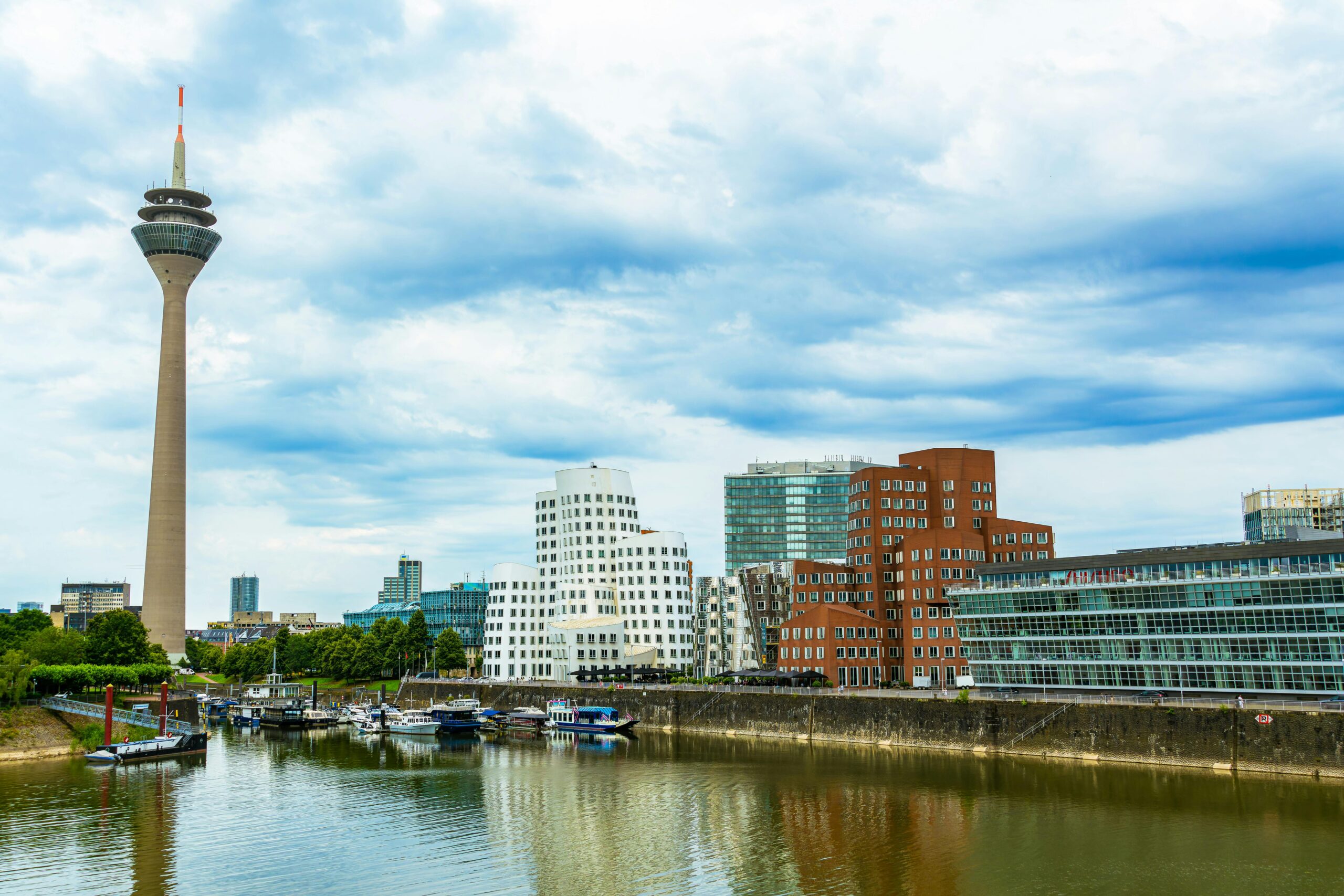
Germany’s most populous state, North Rhine-Westphalia (NRW) boasts an astounding 12 regions.
Assembled rather than inherited, the state was established after World War II with the consolidation of the Rhineland, Westphalia, and Lippe. Those identities remain distinct even now. Cologne feels different from Münster, the Ruhr doesn’t feel like Düsseldorf. Exploring the state thus becomes more like a scavenger hunt, with each city serving as a sort of treasure in itself.
As a whole, this is a region shaped by industry and reinvention. Cathedrals rise beside former coal mines. World-class museums sit in cities that rebuilt themselves from the ground up. Cultural landmarks here aren’t merely preserved—they are created, adapted, and continuously redefined.
If there’s a unifying thread, it’s this: North Rhine-Westphalia gracefully balances outdoor activity with manufactured icons.
The Way to Experience It
Frankly, it would require quite a lot of time to try to “see it all” in NRW.
So consider picking a theme for each visit, and explore the region in various ways!
Spend time along the Rhine (it’s in the name, after all!), checking out cities like Cologne and Bonn with their historically valuable trade positions. Then shift into the Ruhr region, where industry is the trend. Think: former slag heaps reimagined into creative and cultural spaces. Blend exercise and the arts by riding between the varied art museums and galleries found across the state.
There is no singular way to take in this area. As soon as you think you’ve seen it all, there will be a different path to consider!
Food: The Real Highlight
Food in North Rhine-Westphalia reflects the same contrasts that define the state. In the Rhineland, dishes like Rheinischer Sauerbraten, slow-marinated and often balanced with a hint of sweetness, or Himmel un Ääd, a comforting combination of potatoes, apples, and sausage are distinctly regional. In Westphalia, the tone shifts. The cuisine becomes more agricultural, built around ingredients like potatoes, beans, cabbage, and pork, with traditions such as dry-cured Westphalian ham and hearty, no-frills stews shaped by a farming culture.
Across both regions, a few staples tie everything together. Pumpernickel, the region’s signature dark, slow-baked bread, appears often, alongside potato dishes like Reibekuchen, crisp pancakes typically served with applesauce or savory accompaniments. And then there are the more localized traditions—like the Bergisches Kaffeetafel, where coffee is served with a delicious spread of breads, cakes, cheeses, and preserves. It’s less about a single standout dish and more about using the delicacies that exist all around you.
Art, Architecture & Living History
North Rhine-Westphalia doesn’t present history in a single narrative—it presents it in layers.
There are moments of undeniable grandeur, like the cathedral in Cologne or the historic legacy of Aachen. These are places that anchor the region in a much older European story.
But just as significant—arguably more so—is the industrial history that defines much of the state. The Ruhr region, once the center of coal and steel production, has transformed into one of Europe’s most compelling examples of cultural reinvention. Former industrial sites now house museums, performance spaces, and design centers.
And then there are the quieter places—towns like Münster or smaller villages that retain a more traditional rhythm, where history feels less monumental and more integrated into daily life.
What makes NRW distinct is that none of these layers clash. They coexist.
If I Were Planning This Trip
Stay:
I’d choose two bases rather than one—one along the Rhine (Cologne or Düsseldorf) and one within or near the Ruhr or Münsterland region. This allows you to experience the contrast without constantly moving.
Do:
Spend time along the Rhine exploring Cologne and its surrounding areas, then shift into the Ruhr to experience its industrial heritage and cultural transformation. Balance that with time in a smaller city like Münster for a different perspective—one that feels more traditional and locally grounded.
Timing:
Plan for four to five days at minimum. This is a region where variety is the experience, so allowing time to move between places—and adjust to their differences—is key. Spring through early fall offers the most flexibility, especially for exploring both cities and surrounding countryside.
Who This Place Is (and Isn’t) For
North Rhine-Westphalia is for travelers who are interested in tracing how places evolve.
It’s for those who appreciate contrast—who are just as interested in a repurposed industrial site as they are in a historic cathedral. It suits travelers who value culture as something active and ongoing, not just preserved.
It’s not for someone looking for a singular, cohesive aesthetic or a neatly packaged version of Germany. This region doesn’t offer one identity—it offers many.
And it expects you to engage with that complexity.
In Conclusion
North Rhine-Westphalia refuses to be simplified. And that is exactly what makes it compelling.
It’s a place where history wasn’t just inherited, but built, dismantled, and rebuilt again. Where identity isn’t singular, but layered. Where culture isn’t something you observe—it’s something you move through.
NRW won’t fit neatly into the cookie cutter mold of what Germany looks like. It will immerse you with a depth you can see reflected in your own culture.

Let’s work on your personalized Germany itinerary!
Find me on Travel Leaders Network!


