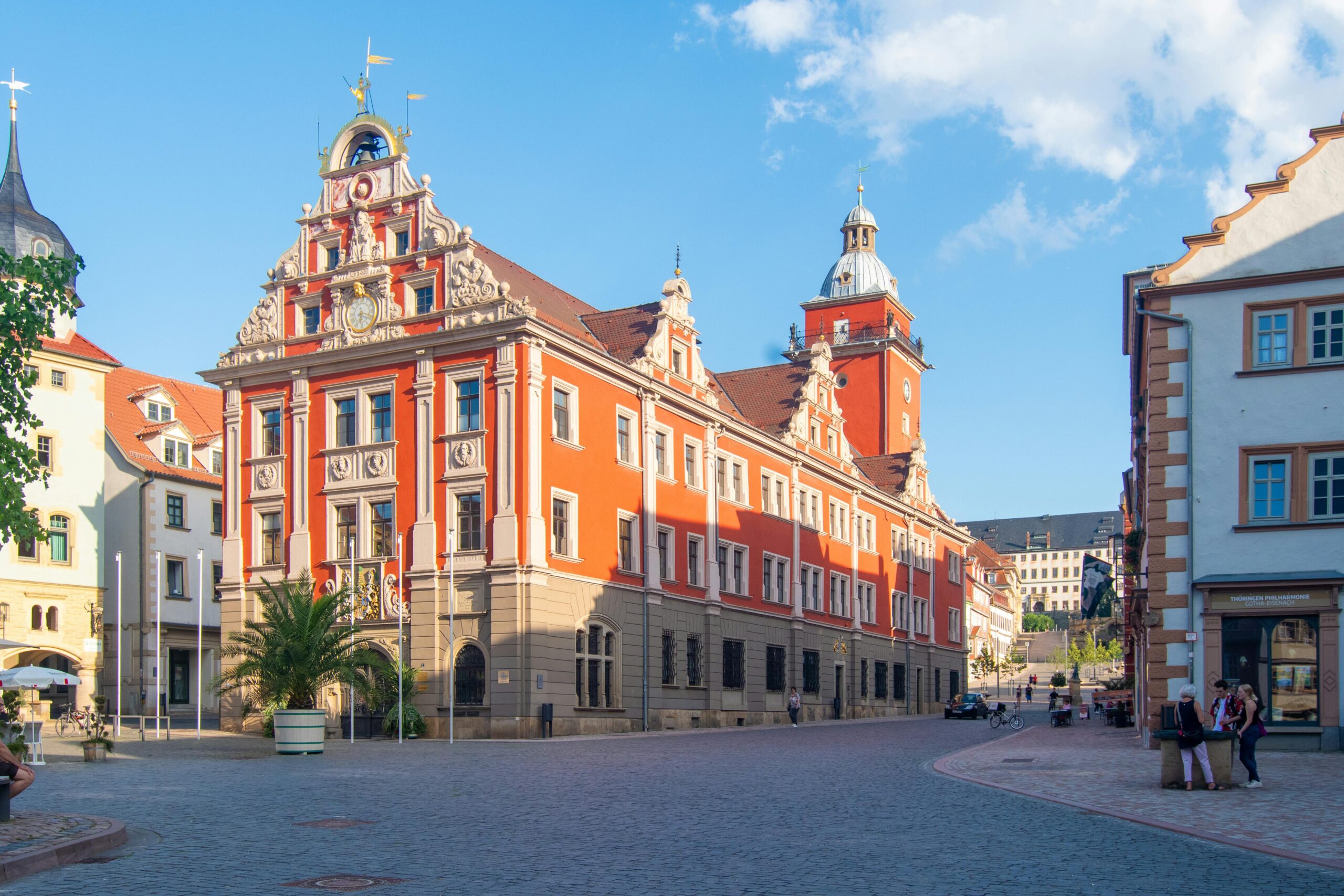
Tucked into the center of Germany, Thuringia is often overlooked in favor of destinations with more internationally recognizable names. As with the country’s other states, Thuringia quietly reveals a rich combination of culture, landscape, and history.
This is the region of dense forests, hilltop castles, and towns shaped by centuries of intellectual and artistic life. It is where figures like Johann Sebastian Bach, Johann Wolfgang von Goethe, and Friedrich Schiller left lasting marks on German culture and the wider world. Despite its significance, Thuringia still feels refreshingly grounded and local rather than overly polished for tourism.
The result is a destination that holds significance to a variety of travelers and inspires delight in Germany’s connection to the arts and global culture.
The Way to Experience It
There is much to see in this region, and I encourage you to see it by including an active component.
Rather than treating it as a checklist of historic sites, I would approach Thuringia like a series of conversations between landscape and culture. One day might involve walking through a classical theater district in Weimar, while the next takes you deep into the Thüringer Wald beneath towering evergreens and mist-covered ridgelines.
Or maybe you incorporate both aspects, by hiking along Lutherweg to locations that were important in Martin Luther’s life and work.
Much of Thuringia is shaped by forested mountains and rolling countryside, which is why it’s often referred to as Germany’s “Green Heart.” Scenic drives and regional train routes connect smaller cities and villages, allowing you to take it in through various modes of transportation.
Weimar, Jena, Eisenach, and Gotha each offer completely different personalities despite being relatively close together. And unlike destinations that have been swamped by tourism, Thuringia still feels lived in.
Markets continue as they always have. Students fill cafés in historic university towns. Churches, castles, and cultural institutions exist as functioning parts of local life rather than tourist attractions, though they serve that function as well.
Food: The Real Highlight
Thuringian cuisine is rooted in tradition and shaped by a cooler climate and the agricultural history of the region.
The most famous specialty is undoubtedly the Thüringer Rostbratwurst, a grilled sausage seasoned with marjoram and traditionally cooked over charcoal. Protected under European geographic designation laws, it remains one of Germany’s most iconic regional foods.
But the culinary identity of Thuringia extends far beyond sausage.
Potato dumplings—known as Thüringer Klöße—appear throughout the region alongside hearty meat dishes and rich gravies. These are so good. Forests contribute mushrooms and game to seasonal menus, while bakeries produce dense cakes and pastries that pair naturally with Germany’s strong coffeehouse culture.
The food here is comforting rather than refined in the traditional luxury sense. Vegetarian and vegan options are not the norm, but those dishes are growing in availability.
And much like the state itself, the culinary culture rewards travelers who are willing to lean into local traditions rather than search for international familiarity.
Art, Literature & Cultural Legacy
This region in Germany carries a globally significant cultural influence that is hard to beat.
Weimar alone would justify a visit. Once home to Goethe and Schiller, the city became the intellectual center of German Classicism and later played a central role in the development of the Bauhaus movement. Walking through the city today feels remarkably intimate given its historical importance. Grand ideas were shaped here, but the city remains approachable.
Elsewhere, different periods of German history continue to be layered on top of each other.
Eisenach is home to Wartburg Castle, where Martin Luther translated the New Testament into German while in hiding during the Reformation. Erfurt’s medieval center remains one of the best preserved in the country, with church spires and merchant houses rising above winding streets and bridges lined with occupied buildings.
Music is inseparable from Thuringia’s identity.
Johann Sebastian Bach’s roots trace back to the state, and Thuringia continues to maintain strong musical traditions through churches, festivals, and concert halls woven into everyday life.
What makes Thuringia special is not simply the amount of history present, but how naturally it still fits with modern life.
If I Were Planning This Trip
Stay:
I would split time between Weimar or Erfurt and a smaller countryside base near the Thüringer Wald. That combination allows for both cultural immersion and access to the region’s landscapes.
Do:
Focus on depth over distance. Spend time exploring Weimar’s literary and Bauhaus history, visit Wartburg Castle in Eisenach, and leave room for slower experiences like hiking forest trails, lingering in historic market squares, or attending a concert in one of the region’s churches or theaters.
Timing:
Late spring through autumn offers the best combination of pleasant weather and outdoor access. December can also be especially atmospheric thanks to traditional Christmas markets that feel more intimate and regional than those in Germany’s larger cities.
Who This Place Is (and Isn’t) For
Thuringia is ideal for travelers drawn to combining the arts with the outdoors.
It works particularly well for people interested in literature, music, philosophy, architecture, and the quieter side of German history. Outdoor travelers will also find an enormous amount to appreciate in the forests, hiking regions, and gardening legacy that shape the state’s landscape.
This is not the right destination for someone looking for fast-paced nightlife, luxury shopping districts, or a globalized tourism infrastructure.
This is one of those places you’ll find yourself drifting to in your thoughts when you’re back home. Wishing you were strolling the gardens and frequenting the bakeries on quiet mornings.
In Conclusion
Thuringia is deeply connected to Germany’s legacy in the world of literature and music.
Its forests, intellectual legacy, preserved towns, and regional traditions all contribute to a destination that feels remarkable yet surprisingly under-discussed.
Thuringia can’t be substituted for any other vacation destination. Instead, it stands confident in its roots and how they will support its relevance in the future—thoughtful, historic, and creative.
And for travelers willing to move beyond Germany’s most obvious itineraries, that authenticity becomes incredibly rewarding.

Let’s work on your personalized Germany itinerary!
Find me on Travel Leaders Network!


