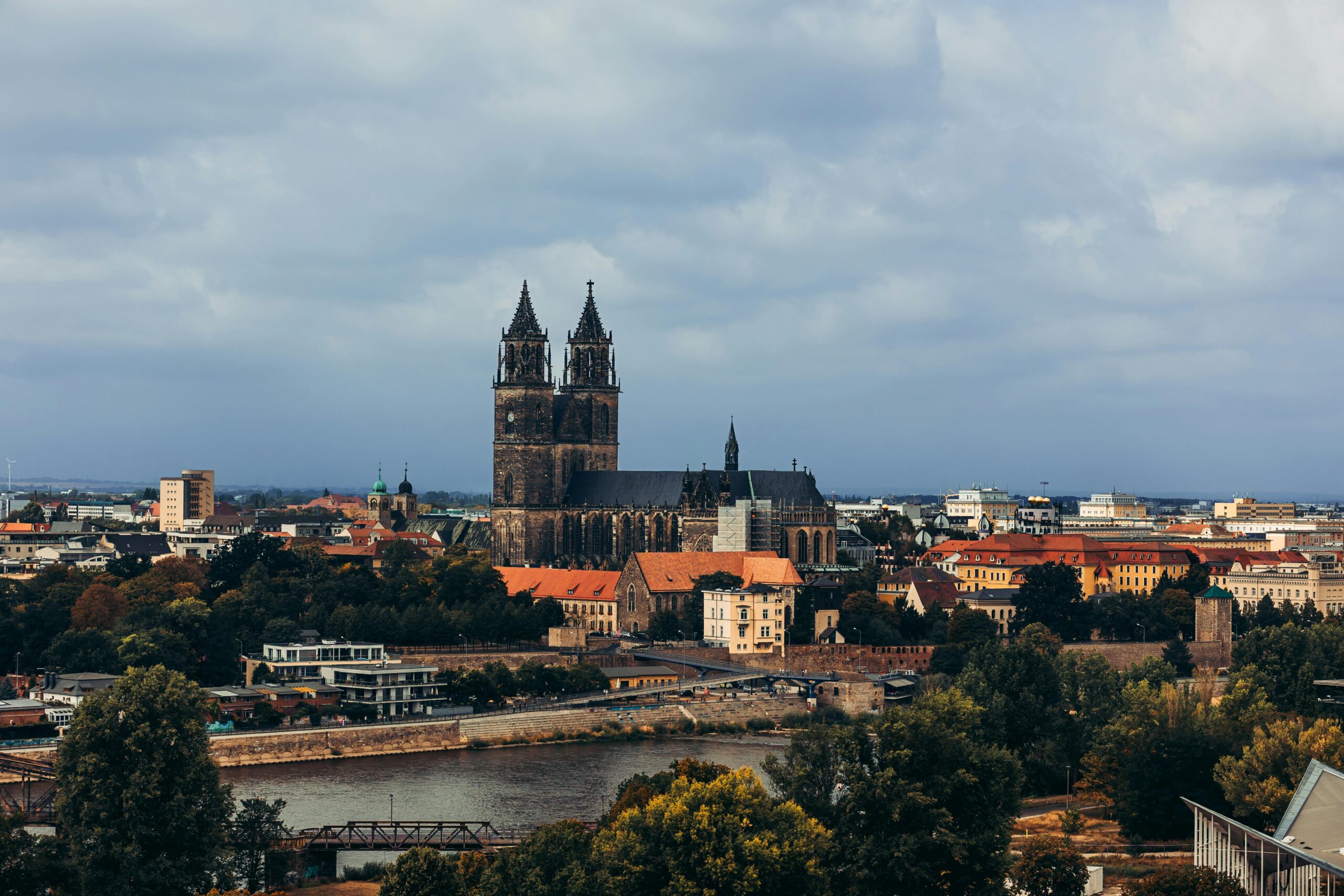
Saxony-Anhalt is representative of German history in so many ways; industrial complexes, medieval wonders, iconic composers, religious revolutions and architectural beauties are all found here. But it doesn’t stop there.
In addition to its manmade relevance, Saxony-Anhalt’s natural landscape delights even those with a slight interest in being outdoors.
Different chapters of Germany’s story exist side by side here. Getting to know the state personally will have you returning home refreshed and inspired.
It’s not a destination built around tourism. This is a place people live and fellow nationals visit. Here’s how (and why!) to add it to your next Germany itinerary.
The Way to Experience It
Saxony-Anhalt is best experienced by blending the outdoors, a wide swath of history and the arts.
Each of these components are represented in the state’s five regions: Altmark, Harz, Saale-Unstrut, Central Elbe and Anhalt-Dessau-Wittenberg.
These places feel fundamentally different—Wittenberg’s theological significance, Saale-Unstrut’s vineyard-lined waterways, Dessau-Wörlitz’s Garden Kingdom and Quedlinburg’s half-timbered charm. Each one of many stops that are little treasures, making you hold your breath for just a moment.
Hop on a bike, kayak, or stroll the many paths that criss-cross these regions, and focus your stops on wineries, sprawling views, and medieval castles. And don’t miss riding the historic railroad through the Harz Mountains!
Food: The Real Highlight
The food here beautifully honors tradition while keeping menus fresh with contemporary twists.
The previously mentioned vineyards produce refreshing wines, including some sparkling options. And you have to stay true to your roots with a variety of tenured and newer breweries. Saxony-Anhalt’s cuisine is shaped by farmland, mountains and rivers—and supporting local growers is nothing new here. When you are here, seek out the cheeses, like Harzer Käse, the first European meat that was canned, Halberstädter Würstchen, and the distinct Salzwedeler Baumkuchen, a sort of rolled cake with each layer progressive baked right over the other over flames.
Food can be an experience here, and you’ll want to leave room for that.
Art, Architecture & Living History
Saxony-Anhalt is notable for the range of artistic styles you can find represented.
Within a relatively small region, you move through over a thousand years of ingenuity. Romanesque churches, Renaissance towns, Enlightenment-era gardens, and modernist Bauhaus design all exist within close reach of one another.
Wittenberg and Eisleben connect you directly to Martin Luther and the Reformation. Dessau reflects the Bauhaus movement, a turning point that reshaped how we think about space and design. Bernburg is an entire complex from the Renaissance era you don’t want to miss.
And then there are the festivals dedicated to music and art (Bach is a major player here), the reimaging of industrial structures that will reveal construction and innovation as art forms, and the 3,600 year-old plate considered to be humanity’s first representation of the night sky.
How many of those have caught your attention by now?
If I Were Planning This Trip
Stay:
Base yourself in Quedlinburg or a nearby town in the Harz foothills. This allows you to settle into the region with the opportunity to get out and explore actively.
Do:
- Begin in Wittenberg as your gateway to the region..
- Continue to Dessau for a Bauhaus experience.
- Explore Quedlinburg in an unstructured time.
- Include Naumburg and an excursion into the Harz Mountains for some natural diversity.
Timing:
Plan for three to four days at minimum, ideally as part of a longer Germany itinerary. Spring through early fall offers lovely flora and fauna, and these quieter seasons can feel especially aligned with the region’s character.
Who This Place Is (and Isn’t) For
This is a destination for travelers who appreciate substance and aesthetics.
For anyone wanting to tap into an under-the-radar, for-Germans-by-Germans, unspoilt destination, Saxony-Anhalt should be your next trip.
It’s not for travelers looking for constant stimulation or a highly curated experience. Saxony-Anhalt doesn’t organize itself around the visitor, and you won’t find any Ripley products represented here.
In Conclusion
Saxony-Anhalt offers something increasingly rare: a place where history and daily life are lived, rather than seen through a phone screen. What’s present is worth capturing, but you have to experience it first.
This is not the part of Germany people talk about first.
But it will illuminate the culture in such a way that you will be so grateful you didn’t skip it.

Let’s work on your personalized Germany itinerary!
Find me on Travel Leaders Network!


